
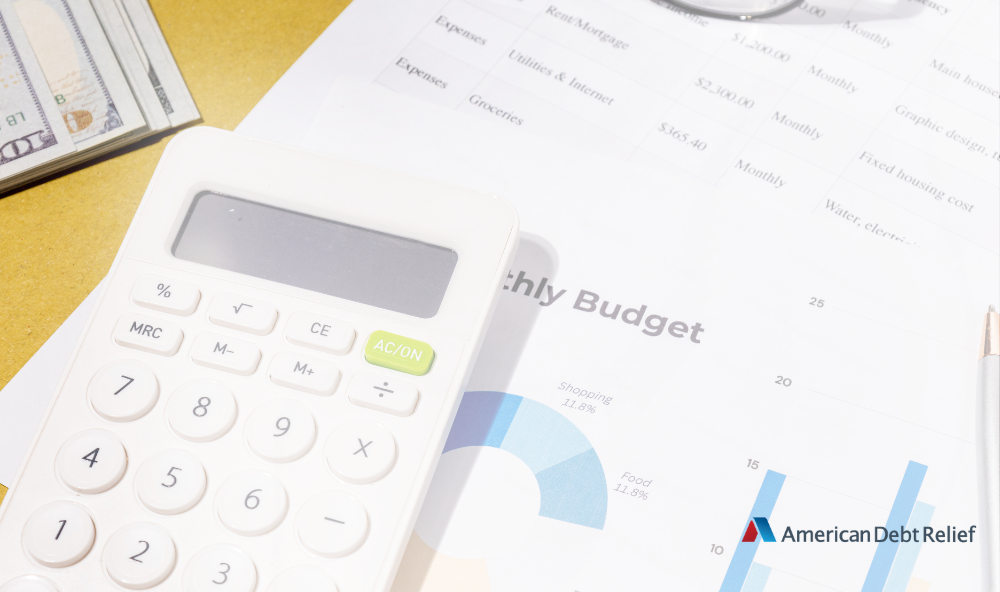
If you feel like your money disappears before the month is over, you’re not alone.
A free monthly budget template can help you see exactly where your income is going, identify spending gaps, and create a realistic plan to pay off debt faster.
Whether you’re trying to stop living paycheck to paycheck or finally get ahead of credit card balances, this guide will walk you through:
-
- How to create a monthly budget
- Different types of budgeting templates
- How to budget when you have debt
- When budgeting alone may not be enough
Let’s start with the basics.
What Is a Monthly Budget Template?
A monthly budget template is a structured worksheet that helps you:
-
- Track income
- List fixed expenses
- Identify variable spending
- Calculate leftover funds
- Plan savings or debt payoff
Instead of guessing where your money goes, you create visibility and control.
Free Monthly Budget Templates & Online Tools
If you’d rather not build a spreadsheet from scratch, several trusted online resources offer free monthly budget templates you can download or customize instantly.
Here are a few popular options:

🧮 NerdWallet – Budget Worksheet
NerdWallet offers a straightforward budgeting worksheet designed to help you:
-
- Calculate monthly income
- Break down fixed and variable expenses
- Identify spending gaps
- Track savings goals
Their worksheet follows a structured format that works well for beginners who want clarity without complexity.
👉 Ideal for: First-time budgeters and anyone who wants a simple, guided worksheet.

🎨 Canva – Free Budget Templates
If you prefer something more visual and customizable, Canva provides a wide range of free, professionally designed budget templates.
You can:
-
- Edit templates directly online
- Customize colors and layout
- Download as PDF or print-ready formats
- Create aesthetic planners or monthly trackers
👉 Ideal for: Visual planners or anyone who wants a more engaging budgeting layout.
📊 TheGoodocs – Free Budget Templates
TheGoodocs offers downloadable budgeting templates in formats such as:
-
- Google Docs
- Google Sheets
- Word
- Excel
- Adobe
These templates are structured and practical, making them useful for more detailed monthly tracking.
👉 Ideal for: Spreadsheet users who want plug-and-play functionality.
How to Choose the Right Budget Template
When selecting a monthly budget template, look for one that:
-
- Clearly separates fixed and variable expenses
- Calculates totals automatically (if digital)
- Includes a debt repayment section
- Feels easy to maintain long-term
The best template isn’t the most complex one — it’s the one you’ll actually use consistently.
Best Budgeting Methods to Pair with a Monthly Template
A template works best when paired with a budgeting system.
50/30/20 Rule – a simple budgeting method that divides your after-tax income into three categories: 50% for needs, 30% for wants, and 20% for savings or debt repayment. It’s designed to create balance—covering essentials while still making steady progress toward financial goals. This approach works well for people who want structure without tracking every single dollar.
Zero-Based Budget – a method where every dollar of your income is assigned a specific purpose so that your income minus expenses equals zero. It doesn’t mean you spend everything; it means you give every dollar a job before the month begins. This strategy provides maximum control and works especially if you’re focused on aggressive debt payoff or strict financial discipline.
Envelope Method – a budgeting system where you allocate cash into separate “envelopes” for specific spending categories. Once the money in an envelope is gone, you stop spending in that category for the month. This technique creates strong spending boundaries and works well if you want a more hands-on way to control your expenses.
How to Budget When You Have Debt
If you’re carrying credit card balances or personal loans, your budget must prioritize:
-
- Minimum payments
- Extra principal payments (if possible)
- Emergency fund building
But here’s something important: if your debt payments consume 30–40% (or more) of your income, budgeting alone may not solve the problem fast enough.
High interest can cancel out your progress.
Here’s an example:
Let’s say you have:
-
- $15,000 in credit card debt
- 24% interest rate
- $300 monthly payment
At that rate, it could take 7+ years to pay off — and you could end up paying over $12,000 in interest alone, depending on how consistently you pay and whether you add new charges.
That means you might repay nearly double what you originally borrowed.
And if life happens — job changes, medical expenses, unexpected repairs — that payoff timeline stretches even further.
This is where many people feel stuck. They’re budgeting responsibly…but high interest keeps them in place.
When Budgeting Alone Isn’t Enough
While budgeting is a crucial first step in managing your finances, it can only do so much if you’re struggling with overwhelming debt. Budgeting works well when:
-
- Your debt is manageable
- You can pay more than the minimums
- Interest rates aren’t overwhelming
However, budgeting may not be enough if:
-
- You’re only making minimum payments
- Balances keep growing
- You’re behind on payments
- Collections have started
If your budget shows that debt is holding you back from achieving your financial goals, American Debt Relief can help. Our debt settlement services work to reduce the total amount you owe, freeing up more room in your budget and allowing you to regain control of your financial future. Don’t let debt stand in the way—schedule a free consultation today to learn how we can help you settle your debt and move toward financial freedom.
At American Debt Relief, individuals can review personalized options based on income, debt amount, and financial goals.



Recent Comments